
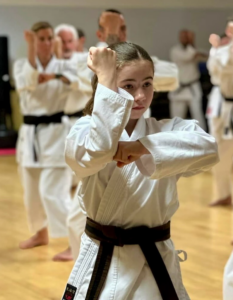
Many parents describe their child as shy, quiet, or hesitant in new situations. While this is a natural personality trait, parents often look for positive ways to help their child build confidence and feel more comfortable around others.
When families search for kids’ karate near me, they are often hoping to find an activity that supports social development as much as physical movement. Karate provides a structured, encouraging environment where shy children can grow at their own pace.
Rather than forcing children to be outgoing, karate helps them develop confidence through small, consistent successes.
Understanding Shyness in Children
Shyness is not a flaw. Many children simply take longer to warm up in social settings or feel unsure when trying something new.
Shy children may hesitate to speak up, avoid group activities, or worry about making mistakes. These behaviours are often linked to self-confidence rather than ability.
The goal is not to change a child’s personality. It is to give them experiences that help them feel capable and secure in unfamiliar situations.
Karate offers these experiences in a structured and predictable way.
A Structured Environment Reduces Anxiety
Karate classes follow a clear routine. Students line up, warm up, practise techniques, and finish together. This predictable format helps shy children feel safe because they know what to expect.
There is comfort in repetition. When children understand the structure, they can focus on learning rather than worrying about what comes next.
This stability is especially helpful for children who feel overwhelmed in unstructured social settings.
Building Confidence Through Small Wins
Confidence does not appear overnight. It develops through repeated experiences of success.
Karate breaks skills into manageable steps. A child might learn a stance, a simple block, or a short sequence. Each achievement builds a sense of progress.
Shy children benefit from this gradual approach. They experience success without pressure, reinforcing the idea that effort leads to improvement.
Over time, these small wins translate into greater self-belief.
Learning to Participate Without Pressure
Karate encourages participation, but it does not demand immediate performance.
Instructors understand that children engage differently. Shy students are given time to observe, listen, and join in when they feel ready.
This respectful approach reduces fear of embarrassment. Children learn that mistakes are part of learning, not something to avoid.
As comfort grows, shy children often begin to volunteer answers, demonstrate techniques, or work confidently with partners.
Social Skills Through Shared Training
Karate classes involve partner work, group exercises, and respectful interaction. These structured social moments help shy children practise communication in a safe environment.
Students learn how to take turns, make eye contact, and support others. Because everyone is focused on learning, social pressure feels lower than in competitive settings.
Friendships often form naturally as children train together, reinforcing a sense of belonging.
Physical Confidence Supports Emotional Confidence
When children feel physically capable, their emotional confidence grows.
Karate teaches posture, balance, and controlled movement. As children master techniques, they begin to carry themselves differently. They stand taller, move with purpose, and feel more secure.
This physical confidence often carries into school and everyday life, helping shy children approach challenges more calmly.
Respect and Encouragement From Instructors
Karate instructors create an environment built on encouragement and respect. Students are recognised for effort, focus, and improvement rather than perfection.
Shy children benefit from this supportive feedback. They learn that progress is valued, helping reduce fear of judgment.
Feeling seen and encouraged builds trust, which is essential for confidence to develop.
Developing Resilience and Self-Belief
Karate teaches children how to persevere when something feels difficult. Techniques require repetition, patience, and attention.
Shy children learn that struggling is normal and that improvement comes through practice. This builds resilience and a stronger sense of self-belief.
Each challenge overcome reinforces the idea that they are capable.
Confidence That Extends Beyond the Dojo
The confidence gained in karate does not stay on the mat. Parents often notice shy children becoming more willing to try new activities, speak up, or engage socially.
Karate provides a foundation of positive experiences that reshape how children see themselves. They begin to trust their abilities and feel more comfortable participating.
Parents searching for children’s karate near me frequently find that karate becomes a turning point in their child’s personal growth.
Supporting Growth at Every Pace
Every child develops differently. Karate respects this by allowing students to progress at their own speed.
Shy children are never rushed. They are guided, encouraged, and supported as they grow more comfortable.
This patient approach ensures that confidence develops naturally and sustainably.
A Safe Path to Greater Confidence
Karate is not about changing who a child is. It is about helping them feel stronger, more capable, and more secure.
Through structure, encouragement, and consistent practice, shy children learn that they can participate, succeed, and enjoy being part of a group.
What begins as a quiet first class can grow into lasting confidence, supporting children both on and off the mat.